Strategic Writings & Insights

Articles & Financial Perspectives

In-depth essays and notes on trading psychology, multi-asset allocation, fund metrics, and executive project management.

IS YOUR MONEY GROWING WITH INDIAN ECONOMY ?
#IndianEconomy #GDPGrowth #IndiaFY27 #EconomicGrowth #PersonalFinance #FinancialPlanning #PurchasingPower #Inflation #CurrencyDepreciation #IndianRupee #GlobalEconomy #EconomicOutlook #InvestmentPlanning #WealthCreation #WealthManagement #FinancialSecurity #PortfolioManagement #RiskManagement #FinancialLiteracy #Macroeconomics #IndianFinancialMarkets #HouseholdFinances #LongTermInvesting #IndiaFinance11/4/2026

IS YOUR MONEY GROWING WITH INDIAN ECONOMY ?

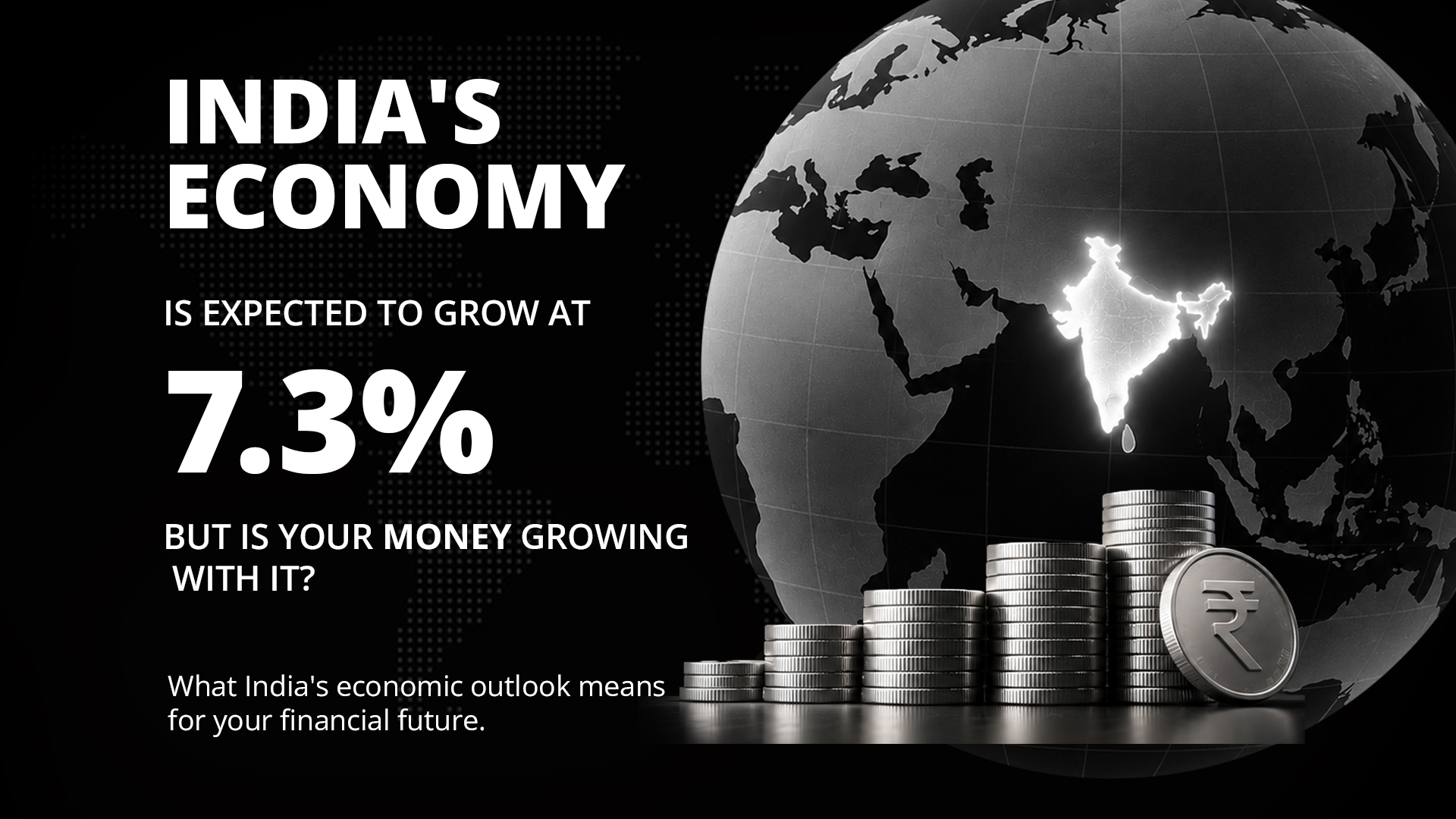
India's economy is expected to grow by 7.3%. But is your purchasing power growing at the same pace? India's Finance Ministry expects the economy to grow by 7.3% in FY27, slightly higher than the RBI's earlier projection of 7.1%. That's encouraging news. But there's another side to this outlook that deserves attention. The same economic review highlights several risks: 1. Inflation → Food supply, global energy prices, and liquidity conditions could influence near-term inflation. 2. Climate risks → An intensifying El Niño could affect soil moisture and the upcoming winter sowing season. 3. Currency pressure → Oil prices, foreign portfolio outflows, and global uncertainty continue to put pressure on the rupee. 4. Global uncertainty → Geopolitical tensions and tighter global financial conditions remain important risks. India has strong external buffers, including $721 billion in foreign exchange reserves as of October 16, according to the report. But here's what I find important about this outlook. Economic growth and personal financial progress are two different things. Even when the economy expands, inflation can affect what your income can buy. Currency movements can influence the cost of imported goods. And global uncertainty can affect investment markets and business confidence. This is why financial planning shouldn't depend only on positive economic headlines. It should account for different scenarios: → Are your investments positioned for long-term growth? → Is your portfolio prepared for inflation? → Do you have enough liquidity to manage unexpected situations? → Are your financial decisions based on long-term goals rather than short-term market movements? A growing economy creates opportunities. But making the right financial decisions determines how well you participate in that growth. P.S. Do you think India's expected economic growth will translate into better financial security for the average household?

₹10 LAKH COVER BUT HOW MUCH IS ACTUALLY COVERED ?
11/2/2026

₹10 LAKH COVER BUT HOW MUCH IS ACTUALLY COVERED ?

Your health insurance policy says ₹10 lakh. But how much of your hospital bill will it actually cover? A policy may look affordable today. But when a medical emergency occurs, the fine print can make a significant difference. Before choosing a health insurance plan, here are 5 things you should check. 1. Don't choose based on price alone. A lower premium doesn't automatically mean better value. Consider your family's needs, age, medical requirements, and the cost of treatment in your city. 2. Check the network hospitals. Are your preferred hospitals part of the insurer's network? Cashless treatment, subject to approval and policy terms, can reduce the need to arrange the entire eligible hospital bill upfront. 3. Understand the waiting periods. Some pre-existing conditions and specified illnesses may not be covered immediately. Know what is covered from day one and what requires a waiting period. 4. Look beyond the sum insured. Room rent limits, co-payment clauses, deductibles, and disease specific sub limits can affect how much you ultimately pay from your own pocket. A ₹10 lakh policy doesn't necessarily mean every eligible medical expense will be covered in full. 5. Check the benefits and their conditions. Look at restoration benefits, day care procedures, and pre- and post-hospitalisation expenses. Don't just check whether a benefit exists. Understand its limits and conditions. The value of health insurance isn't just the amount printed on your policy. It's how the coverage works when you need it most. Take time to read the policy wording, understand the exclusions, and compare plans based on your actual needs rather than the premium alone. P.S. When choosing health insurance, what matters most to you ? Affordability, access to hospitals, or comprehensive coverage?
WHAT'S YOUR BIGGEST FINANCIAL BLIND SPOT ?
behavioural finance10/29/2026

WHAT'S YOUR BIGGEST FINANCIAL BLIND SPOT ?

You can increase your income every year and still be one bad financial decision away from trouble. Why? Because earning money and making good financial decisions are two different skills. A higher salary can fund a better lifestyle. But if every pay rise brings a bigger car EMI, more lifestyle expenses, and new financial commitments, your income grows while your financial flexibility stays almost the same. That’s the part of personal finance we don't talk about enough. We learn how to earn more. But do we learn how to protect what we earn? Do we calculate what a financial setback could cost us before taking a risk? Do we question whether we're buying something because we need it or because we want others to see us differently? Do we understand the long-term cost of today's decisions? These aren't just questions about money. They're questions about behaviour. Sometimes, the costliest financial decision isn't a bad investment. It's a decision made to protect your pride, satisfy social expectations, or avoid confronting reality. This is why behavioural finance interests me. It looks beyond the numbers to examine the psychology behind them: our biases, emotions, habits, and assumptions. Because two people can earn the same amount, face the same opportunities, and make completely different financial choices. Over time, those choices can lead to very different outcomes. The question isn't only how much money you can make. It's whether your decisions are helping you build the financial life you actually want. P.S. What do you think people misunderstand the most about money? I’d love to hear your perspective in the comments.
IS YOUR SALARY BUILDING YOUR WEALTH ?
Salary Slip Challenge10/29/2026

IS YOUR SALARY BUILDING YOUR WEALTH ?

Your CTC might be ₹10 lakh. But how much of that is actually building your wealth? Most people look at their salary slip and ask: “How much will I get in my bank account?” Very few ask: “How much wealth can this income actually create?” That’s what I want to find out. I’m starting the #SalarySlipChallenge. Here’s how it works: You can share your salary/CTC with me personally if you need help understanding your finances. ₹5 LPA? ₹10 LPA? ₹25 LPA? ₹50 LPA? ₹1 Cr+? Send me your numbers, and based on your situation, I’ll create a post breaking down where your money could potentially be getting lost, through things like: → Tax inefficiencies → Poor allocation → Missed compounding opportunities → Inadequate protection → Lifestyle inflation And more importantly, what you could do differently. You don’t have to share your salary publicly. Send it to me privately. No judgement. Just numbers. I’ll start creating breakdowns based on the responses I receive. If you want me to analyse your salary, send me your CTC/salary privately. Let’s see how much wealth your salary could actually be building.
WILL YOUR FAMILY KNOW WHAT TO DO WITH YOUR MONEY IF YOU'RE NOT THERE
personal finance10/29/2026

WILL YOUR FAMILY KNOW WHAT TO DO WITH YOUR MONEY IF YOU'RE NOT THERE

₹10,000 crore is sitting with the government. And one reason is simple. Families don’t always know what happens to their money when an emergency strikes. There are two kinds of people in our society. One group, when an emergency happens, already knows what to do. They have their financial details documented. They know what assets they have. They know their liabilities. They know where their important documents are. And their family knows what needs to be done. The second group? They start figuring everything out after the emergency happens. And that's where the real problem begins. Because both families may face the same emergency. But one family has a plan. The other has confusion. That’s why having a Personal Finance Binder can be so important. A simple document that clearly records: → Your assets → Your liabilities → Your investments → Important financial documents → Insurance details → Key contacts → Your financial wishes and instructions Think of it as a financial emergency manual for your family. You may never need it. But if something unexpected happens, your family shouldn't have to search through your life to understand what to do. Financial planning isn't only about growing your money. Sometimes, it's about making sure your family can find and manage it when you're not there to explain. Would you keep a Personal Finance Binder for your family?
ARE YOU BUILDING THE RIGHT FINANCIAL HABITS BEFORE AGE 21
financial planning10/29/2026

ARE YOU BUILDING THE RIGHT FINANCIAL HABITS BEFORE AGE 21

Want to get your financial life in order by 21? Start with these 5 things. You don't need a huge salary or a rich family to build a strong financial foundation. But the decisions you make in your early 20s can make a real difference. Here are 5 things I'd focus on. 1. Get the right insurance early. Understand health insurance and life insurance before you actually need them. Starting young may help you access lower premiums, subject to your health, coverage, and policy terms. 2. Start investing early. You don't need lakhs to begin. Start with an amount you can afford, learn how different investments work, and give your money time to grow. The earlier you start, the more time compounding has to work in your favour. 3. Don't rush into credit cards. A credit card can be useful when managed responsibly. But if you spend money you cannot repay, it can quickly become a debt trap. Understand the repayment rules before you swipe. 4. Invest in your skills. Your earning potential is one of your biggest financial assets when you're young. Learn skills that people and businesses are willing to pay for. Keep improving them. Your ability to earn can matter just as much as your ability to save. 5. Get your PAN card. If you're 18 or older and don't have a PAN card yet, understand how to apply for one. It's an important document for many financial activities, including investing in stocks and mutual funds, subject to applicable requirements. Here's the thing: You don't need to have your entire life figured out by 21. But you can start building the foundation now. Protect your finances. Start investing. Avoid unnecessary debt. Build valuable skills. Get your financial basics in place. Your future self will thank you for starting early. P.S. Which of these five have you already completed?
HOW CAN 5LAKH BUILD YOUR WEALTH
Salary Slip Challenge10/15/2026

HOW CAN 5LAKH BUILD YOUR WEALTH

₹5 LPA sounds small. But your first ₹5 lakh can teach you more about wealth than your first ₹50 lakh. Someone recently shared their salary with me. CTC: ₹5 LPA And instead of asking: “Is ₹5 lakh a good salary?” I asked a different question: “What can this ₹5 lakh actually do for you?” People are very concerned about how much they earn. But they don't always pay enough attention to how much they spend. At this income level, the biggest mistake isn't necessarily earning less. It’s having no structure for the money that comes in. Your salary needs a job. → First, track your spending and understand where your money is going. → Create a proper budget for your needs, wants and savings. → Set aside a fixed percentage for savings every month. → Make that saving recurring/automatic, instead of saving whatever is left at the end of the month. → Build an emergency/rainy-day fund for situations like job loss or unexpected expenses. → Then look at insurance and financial protection. → And only after that, focus on investing and growing your wealth. For example, if someone earns ₹1 lakh a month, they could structure their budget around something like: 50% - Needs 30% - Wants 20% - Savings The exact percentage can change depending on the person's situation. But the important part is having a system and tracking it consistently. Because ₹5 lakh earned and ₹5 lakh properly structured are two very different financial situations. You don't need to wait until you earn ₹10L, ₹20L or ₹50L to start thinking about wealth. The habits you build at ₹5L often determine what happens when your income becomes ₹15L. This is exactly why I started the #SalarySlipChallenge. If you want me to break down your salary, send me your CTC privately. I might use your situation for the next breakdown. And if you feel you need help planning, tracking, or structuring your finances, feel free to ping me. Let’s see how much wealth your income can actually build.
FD VS MUTUAL FUND
FD vs Mutual Funds10/15/2026

FD VS MUTUAL FUND

The difference between ₹12 lakh invested and ₹50 lakh accumulated could come down to ONE decision. Two people invest ₹5,000 every month for 20 years. Same amount. Same timeline. Different investment choices. Here's what the numbers could look like: Option 1 - Fixed Deposit (FD) → Monthly investment: ₹5,000 → Assumed annual return: 7% → Total invested: ₹12 lakh → Estimated value: ₹26 lakh Option 2 - Mutual Fund → Monthly investment: ₹5,000 → Assumed annual return: 12% → Total invested: ₹12 lakh → Estimated value: ₹50 lakh That's a difference of approximately ₹24 lakh. Same monthly commitment. But a very different outcome. Why does this happen? Compounding can make a significant difference over long periods. Even a small difference in annual returns can create a much larger gap over 20 years. But here's what you should remember: An FD offers more predictable returns and lower risk. Mutual funds have the potential for higher long term growth, but they also carry market risk. A 12% return is an assumption, not a guarantee. The real question isn't just where your money grows faster. It's which investment fits your goals, risk tolerance, and timeline. If you're unsure how to structure your investments, ping me. Let's plan your money around your goals.
EARN ₹1 LAKH STILL AT RISK?
Personal Finance10/14/2026

EARN ₹1 LAKH STILL AT RISK?

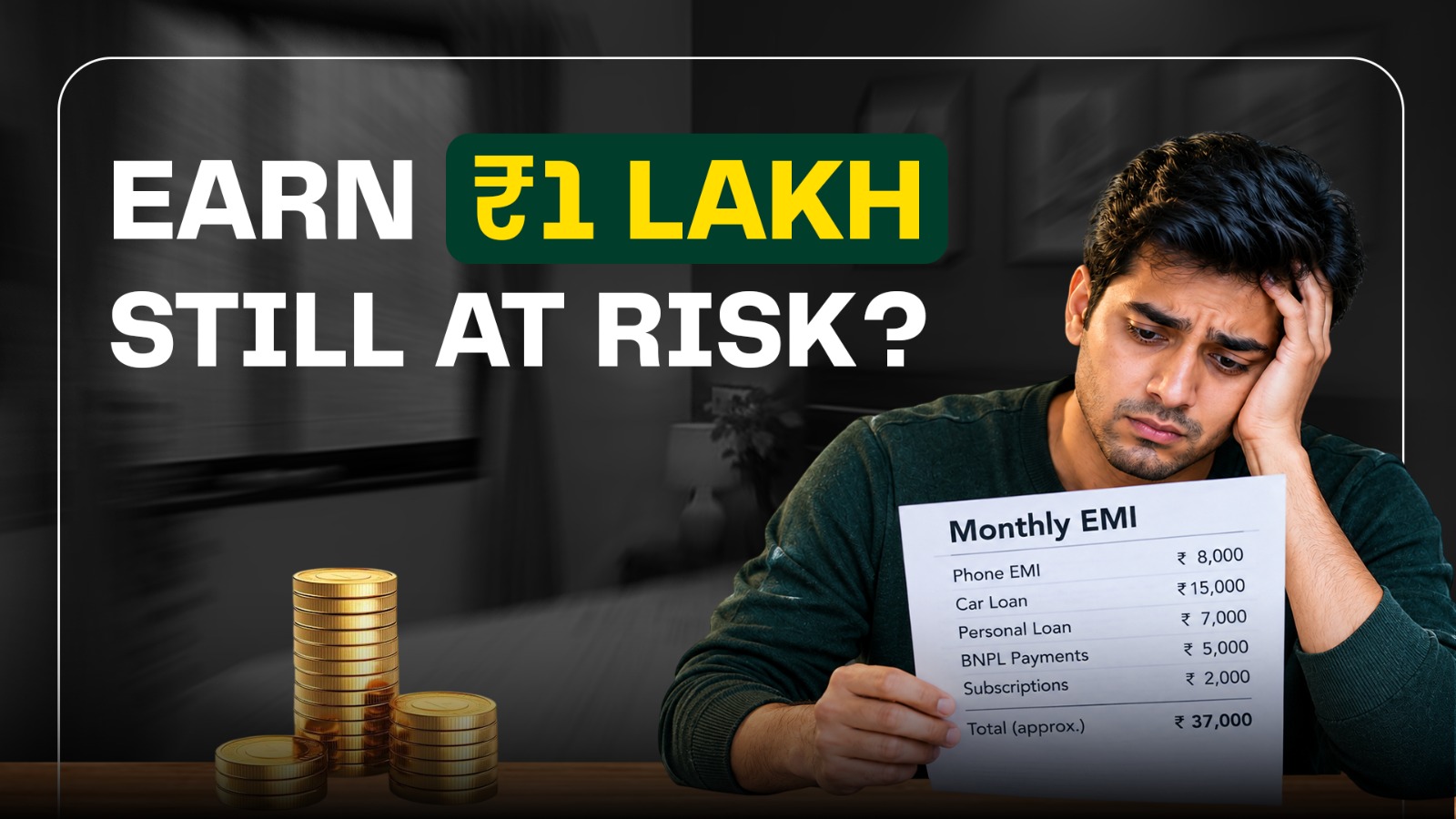
You might be one salary away from financial stress, even if you earn ₹1 lakh a month. Not because you earn too little. But because too much of your future income is already spent. A phone on EMI. A car loan. A personal loan. A few "Buy Now, Pay Later" purchases. Subscriptions you barely notice. Individually, each payment seems manageable. But put them together, and suddenly a large part of your salary is committed before the month even begins. That's the hidden cost of easy credit. The problem isn't always taking a loan. Sometimes, it's losing track of how many financial commitments you've taken on. Before your next EMI, ask yourself three questions: 1. Do I really need this purchase right now? 2. How much of my monthly income is already committed? 3. If my income stops for three months, can I still manage these payments? Because affordability isn't just about whether you can pay the EMI today. It's about whether you can handle the commitment tomorrow. A higher income can improve your lifestyle. But financial freedom also depends on how much of that income you keep under your control. P.S. What's one EMI or recurring payment people underestimate the most?